

Safety and security are both essential for protecting people, property, and critical environments, but they address different types of risks. Understanding the difference between them is especially important when managing a critical site, as it helps you identify potential threats, choose the right protective measures, and make informed decisions every day.
What Is Security?
Security refers to the protection of people, organizations, property, and other valuable assets from external threats, criminal activity, and intentional acts of harm. It focuses primarily on preventing deliberate actions that could damage, disrupt, or threaten individuals, businesses, facilities, or assets. Effective security measures are designed to identify potential threats, reduce vulnerabilities, and prevent unauthorized or harmful activities.
What Is Safety?
Safety refers to the condition of being protected from hazards, accidents, and other situations that could cause unintended harm. It involves identifying and controlling risks before they result in injury, damage, or loss. Safety practices are therefore focused on preventing accidental incidents and creating an environment where people and assets can remain protected from avoidable risks.
Why the Difference Between Safety and Security Matters to You
Understanding whether an incident is primarily a safety or security issue is essential for responding effectively and preventing similar events in the future. Regulators, employees, customers, and other people who depend on your operations may all ask the same questions: Why did this happen, and what measures are being taken to prevent it from happening again? Finding the right answers begins with having a clear and consistent understanding of the type of risk involved.
Within an organization, using safety and security terminology consistently makes communication much easier. It allows teams to explain risks clearly to leadership, support investment decisions, and encourage operations, IT, safety, and security teams to work together when managing complex risks.
Safety vs Security in Plain Language
A simple way to understand the difference between safety and security is to consider the type of threat involved. Safety asks, “What if something goes wrong by accident?” Safety focuses on unintentional harm caused by technical failures, human error, equipment problems, or natural events. Fires, chemical leaks, workplace accidents, process failures, falls, and severe weather affecting a facility are generally considered safety-related risks.
Security asks, “What if someone intentionally wants to harm us?” Security focuses on deliberate threats such as theft, vandalism, sabotage, cyberattacks, terrorism, unauthorized access, and other intentional attempts to damage people, property, information, or operations.
Both areas are important because safety and security address different types of risks. Effective risk management requires organizations to consider both accidental hazards and intentional threats when protecting people, facilities, systems, and critical operations.
How Safety and Security Appear on Critical Infrastructure Sites

On a critical infrastructure site, safety and security are closely connected to everyday operations. Safety concerns may arise when organizations manage hazardous industrial areas, where accidents can result in injuries, equipment damage, environmental harm, or operational disruption. Unintentional fires in storage or waste-treatment areas, equipment failures that put workers at risk, and severe weather affecting sensitive installations are also examples of safety-related concerns.
Security concerns become more prominent when there is a possibility of deliberate interference or unauthorized activity. Examples include unauthorized access to hospitals, control rooms, or data centers, theft of sensitive equipment or information, deliberate sabotage of operational systems, and intentional fires or attacks in public or restricted areas.
Some incidents can involve both safety and security. For example, a cyberattack against an industrial control system is primarily a security incident because it involves intentional unauthorized activity. However, if the attack affects machinery, industrial processes, employees, or the surrounding environment, the resulting consequences can create serious safety risks as well. This overlap shows why organizations need coordinated safety and security strategies rather than treating the two areas as completely separate.
Different Rules, Same Responsibility
Regulations may treat safety and security as separate areas, but organizations still have a responsibility to protect their people, assets, and operations. Safety is often governed by detailed regulations, audits, technical standards, and procedures covering areas such as fire protection, worker protection, workplace hazards, and industrial risks. Security, on the other hand, may be less precisely defined by legislation in some sectors, but organizations are still generally expected to take reasonable measures to address foreseeable threats and protect against intentional harm.
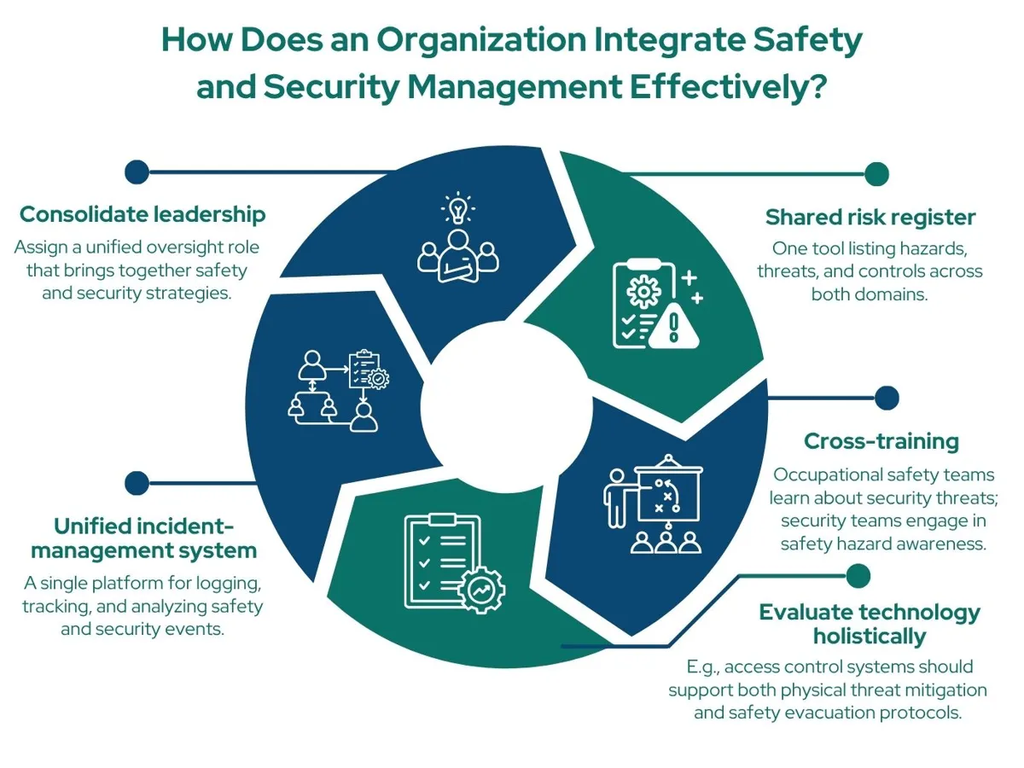
In practice, organizations benefit from taking a joined-up approach to both areas. People working at or living near a site do not necessarily distinguish between safety equipment and security equipment. Their main concern is whether the environment is properly protected and whether they can work, travel, and live around the site with confidence, regardless of whether a potential danger originates from an internal process, an accidental event, or an external threat.
Plan Safety and Security Together

When developing a new project or upgrading an existing facility, it is useful to consider safety and security as part of the same long-term risk management strategy. The process should begin by identifying what matters most to the organization, including the people, critical assets, systems, and processes that cannot afford to be disrupted or lost.
The next step is to consider both accidental and intentional risks. This means examining everything from equipment failures, human error, fires, and environmental hazards to targeted intrusion, vandalism, sabotage, and cyberattacks. Looking at these risks together can provide a more complete understanding of the threats facing a site.
Organizations should also consider technologies and solutions that can work together rather than operating as isolated systems. Integrating access control, intrusion detection, video surveillance, alarms, and other monitoring technologies can provide teams with a clearer view of events and help reduce gaps between separate security and safety systems.
An integrated approach can help teams respond more quickly and confidently during an incident. It can also create a more flexible foundation for adopting future technologies and incorporating new types of information and data from the field.
A Simple Way to Remember
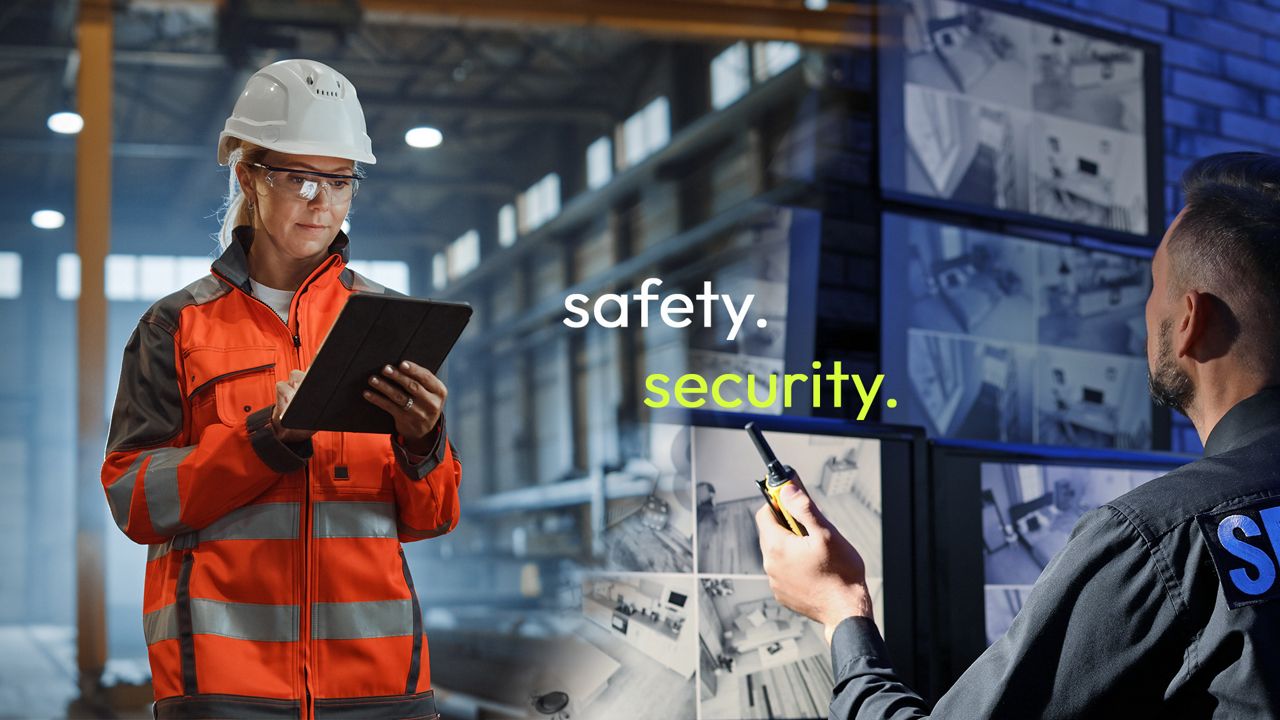
A simple comparison can make the difference between safety and security easier to understand and remember. The following framework can be useful during training sessions, team discussions, or management presentations.
| Aspect | Safety | Security |
|---|---|---|
| Main goal | Protects people and assets from accidents and unintended incidents | Protects people, assets, and systems from attacks, crime, and misuse |
| Type of danger | Unintentional danger caused by errors, failures, or natural events | Intentional danger caused by malicious or unauthorized human actions |
| Typical examples | Fires, chemical spills, equipment failures, workplace accidents, and storms | Theft, sabotage, unauthorized access, vandalism, and cyberattacks |
| Typical measures | Protective equipment, fire alarms, safety procedures, training, and emergency plans | Locks, security personnel, access control, surveillance, authentication, and passwords |
| Direction of risk | Often considered “inside out,” where processes or systems fail and create hazards | Often considered “outside in,” where someone attempts to enter, interfere with, or damage a system |
| Key question to ask | “How can we prevent accidents and unintended harm?” | “How can we prevent attacks and intentional harm?” |
The key idea is straightforward: safety focuses primarily on preventing accidental harm, while security focuses primarily on preventing intentional harm. Although the two areas have different objectives, they often overlap, particularly on critical infrastructure sites where a security incident can create significant safety consequences.
Frequently Asked Questions
What is the main difference between safety and security?
Safety focuses mainly on preventing accidents, hazards, and unintended harm, while security focuses on preventing intentional threats such as theft, sabotage, unauthorized access, and cyberattacks.
Why are safety and security both important?
Both are essential because organizations can face accidental hazards as well as deliberate threats. Managing both helps protect people, property, information, and business operations.
Is a cyberattack a safety or security issue?
A cyberattack is generally a security issue because it involves intentional unauthorized activity. However, if the attack affects industrial systems, equipment, or critical processes, it can also create serious safety risks.
What are common examples of safety risks?
Common safety risks include fires, chemical spills, equipment failures, workplace accidents, human error, hazardous processes, and severe weather events.
What are common examples of security risks?
Security risks can include theft, vandalism, unauthorized access, sabotage, deliberate fires, terrorism, and cyberattacks.
Conclusion
Safety and security address different types of risks, but both are essential for protecting people, assets, information, and operations. Safety focuses primarily on preventing accidental harm caused by failures, errors, hazards, or natural events, while security focuses on preventing intentional threats such as theft, intrusion, sabotage, and cyberattacks. Understanding these differences helps organizations identify risks more accurately and choose appropriate protective measures.
For critical sites and modern organizations, safety and security should not be treated as completely separate responsibilities. An integrated approach allows teams to respond more effectively to incidents, reduce vulnerabilities, improve communication, and build greater resilience. By planning for both accidental and intentional threats, organizations can create safer, more secure environments and remain better prepared for changing risks.
